
New MSK research uses saturation genome editing to better understanding of the RAD51C gene, which has been linked to higher risks of breast and ovarian cancer; sheds new light on brain metastasis; and finds a commercially available contrast dye could help surgeons better separate cancer from healthy tissue.
In the Lab
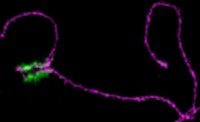
One’s big, one’s small. Somehow, they make it work.

In the Lab
Laboratory studies have revealed an explanation for why androgen-deprivation therapy makes radiation therapy more effective in the treatment of high-risk prostate cancer.
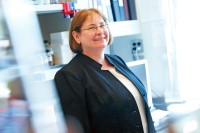
Developmental biologist Maria Jasin studies homologous recombination, which is important in DNA repair and can lead to cancer when it malfunctions.


