Scientists have discovered an inherited gene variant that may reduce the risk of developing certain blood cancers.
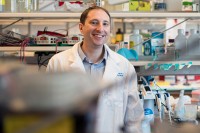
An inside look at the research of MSK's Dr. Michael Kharas, whose work on RNA biology is shedding new light on cancer.

In the Lab
SKI researchers have learned how tiny droplets prevent a cancer-causing type of messenger RNA from being degraded in leukemia cells.
In the Lab
Leukemia cells metabolize fructose in a way that could make them easier to target with drugs.

In the Lab
MSK investigators have used a lab tool originally developed to study fly nerve cells to uncover new findings about acute myeloid leukemia.
In the Lab
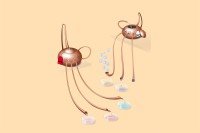
Research in blood stem cells has revealed new information about how these cells decide what to become when they divide.

In the Lab
Researchers identify a compound that appears to eliminate tumor cells in a dish and in mice.

In the Lab
MSK researchers have found that a protein that contributes to one type of leukemia when it’s missing can lead to the formation of a different leukemia type when it’s present.
In the Lab
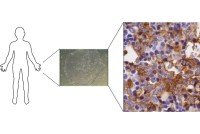
A new laboratory tool will allow researchers to study the progression from normal cells to myelodysplastic syndromes to an aggressive type of leukemia.
Three emerging investigators are tackling the mysteries of biology and cancer at Memorial Sloan Kettering.

Cancer biologist Michael Kharas explores molecular processes that stem cells and tumor cells have in common.